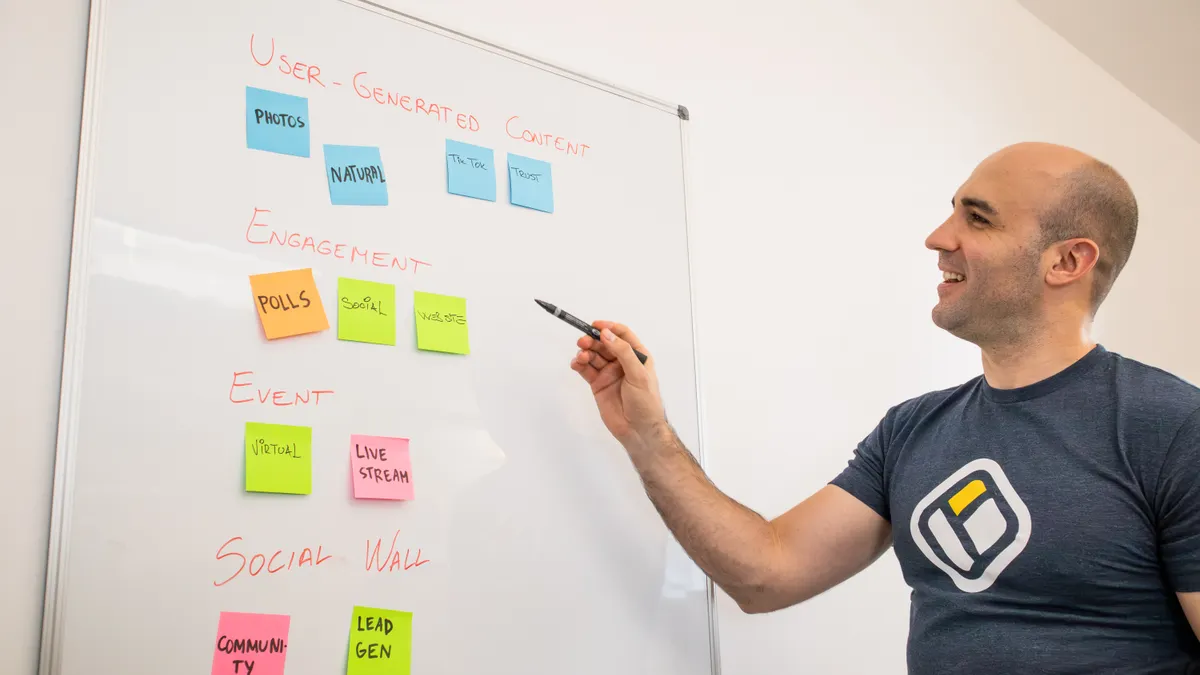
Last updated: October 13, 2026
Quick Answer: Answer-engine optimization strategy and governance works best when you start with 4 rules—one canonical answer, one named owner, one review date, and one source list—because answer engines reward pages that are easy to quote, verify, and refresh. Answer-engine optimization strategy and governance, or AEO, is the practice of making your content easy for AI search systems, voice assistants, and answer boxes to extract, trust, and cite. The strategy works only if governance comes first: without clear standards for facts, structure, ownership, and refresh cycles, AEO turns into a pile of inconsistent pages that are easy to quote and hard to trust.
I write about search, content operations, and information architecture, so I care less about the buzzword and more about the operating model behind it: what to publish, who approves it, how to keep it accurate, and where the brand is willing to show up when the answer is stripped down to one paragraph. This guide to answer-engine optimization strategy and governance keeps the topic explicit because the work only makes sense when content, review, and ownership sit in the same system.
What answer-engine optimization strategy and governance actually changes
AEO changes the unit of success from “ranking a page” to “being the source an engine can safely summarize.” That sounds small, but it changes how content gets planned, edited, and governed.
Traditional SEO usually starts with a page, a keyword, and a path to clicks. AEO starts with a question, a claim, and the smallest credible answer to that claim. If a page cannot be paraphrased into a clean answer without breaking its meaning, it is harder for an answer engine to use. If a page buries the point in scene-setting, digression, and brand language, it is weaker.
The practical shift is visible in the formats that tend to earn citations and extracts: definitions, step lists, comparison tables, short procedural answers, and concise “who it is for” sections. A search system can quote a 40-word explanation much more easily than a 1,500-word essay that circles the subject for six paragraphs. The same is true for schema, headings, and clean entity references. A page about “PCI DSS 4.0” that says exactly what the standard covers, who needs it, and what changed will usually outperform a page that uses the phrase twenty times and explains nothing.
The trap is to think AEO means writing for machines instead of people. That is wrong. Answer engines still reward pages humans can trust, skim, and verify. The better approach is to make the answer legible to both. That means a direct first sentence, concrete nouns, stable terminology, and evidence that survives being excerpted.
The mistake I see most often is treating AEO as a copywriting trick. It is not a trick. It is an editorial system. If the source material is weak, no amount of heading polish will fix it. If governance is weak, the content may get cited for the wrong thing, or worse, not cited because the engine cannot determine which page is authoritative. If you are making health, legal, or financial claims, consult a qualified professional before publication and review the current guidance from Google Search Central and the NIST AI Risk Management Framework. Google’s Search Central documentation and NIST’s AI RMF both emphasize quality, reliability, and risk-aware practices.
What should your AEO strategy optimize for first?

It should optimize for source eligibility first, not traffic volume first. That means the page has to be understandable, trustworthy, and easy to quote before it is optimized for clicks, conversion, or brand polish.
Here is the order I would use:
- Fact clarity. The page must say one thing plainly in the first 1–3 sentences.
- Answer shape. The content must use formats that can be extracted cleanly: short intro, headings that state the subquestion, bullets, comparison tables, and direct summaries.
- Entity precision. Names, standards, products, dates, and definitions must be consistent across the page and across the site.
- Authority signals. The page should show who wrote it, who reviewed it, what sources support it, and when it was last checked.
- Conversion path. Only after the page can be safely quoted should you push toward demo requests, subscriptions, or sales.
That order matters because answer engines do not reward hidden persuasion well. A page that is strong on CTA language but weak on evidence may still attract some clicks in classic search, then fail in AI search where the system wants a short, stable answer.
A good AEO strategy also has to choose the right content mix. Not every page should target answer extraction. I would separate content into three buckets:
- Reference pages for definitions, specifications, policies, and procedures.
- Decision pages for comparisons, recommendations, and “which one should I choose?” questions.
- Support pages for troubleshooting, edge cases, and implementation details.
The governance implication is simple: each bucket needs different approval rules. A reference page about a compliance term should pass through stricter review than a short opinion piece. A decision page should have the strongest claim discipline, because it is likely to be quoted by the model when someone asks a direct question.
The wrong move is to chase every query with the same page template. That usually creates content that is neither deep enough for humans nor structured enough for machines.
How do you build governance that keeps AEO credible?
You build it with ownership, review rules, and content controls tied to risk. If nobody owns the answer, the answer will drift.
Governance starts with a simple decision: which pages count as authoritative source material. I would mark them by type, because not all pages deserve the same review chain.
For example:
- High-risk pages: legal, medical, financial, safety, pricing, claims, and policy pages.
- Medium-risk pages: product comparisons, buying guides, technical explanations, and integration docs.
- Low-risk pages: basic explainers, glossary entries, and top-of-funnel educational content.
High-risk pages need named owners, review dates, and change logs. A page that says “HIPAA” or “GDPR” or “80 PLUS Gold” should not be left to a writer alone if the page will be used as a source of truth. At minimum, one subject-matter reviewer should sign off on the claims before publication and again after material changes. In practice, that review can be a 15-minute check for a low-risk glossary page or a 60-minute review for a claims page.
Governance should also define content rules that editors can apply fast:
- Use one canonical term per concept.
- Avoid vague superlatives unless they are tied to a source.
- State the limitation in the same section as the benefit.
- Quote standards exactly when needed.
- Refresh any page whose underlying policy, model, regulation, or product specification changes.
AEO governance gets easier when you treat it as an information architecture problem. That means mapping question clusters to canonical pages. If three pages answer the same question in slightly different ways, you have a governance problem, not a content problem. Answer engines will often select the page with the cleanest structure, not the one your team worked hardest on. If the site has 30 pages that all point to one decision, the fix is usually structural, and a content strategist or information architect can help you map it correctly.
The biggest risk is false confidence. A page can look polished and still be wrong by one detail that matters. In answer systems, one wrong detail is enough to damage trust. I would rather publish fewer pages with stronger review than flood the index with lightly edited summaries.
This is also where many teams get overconfident about AI-assisted drafting. Drafting assistance is useful for structure, outlines, and first-pass wording. It is not a substitute for approval on claims. Governance should say exactly where human review is mandatory, what sources count, and which claims require proof before publication. If a claim affects legal exposure, pricing, or safety, consult the relevant professional before release.
What does a practical AEO content system look like?
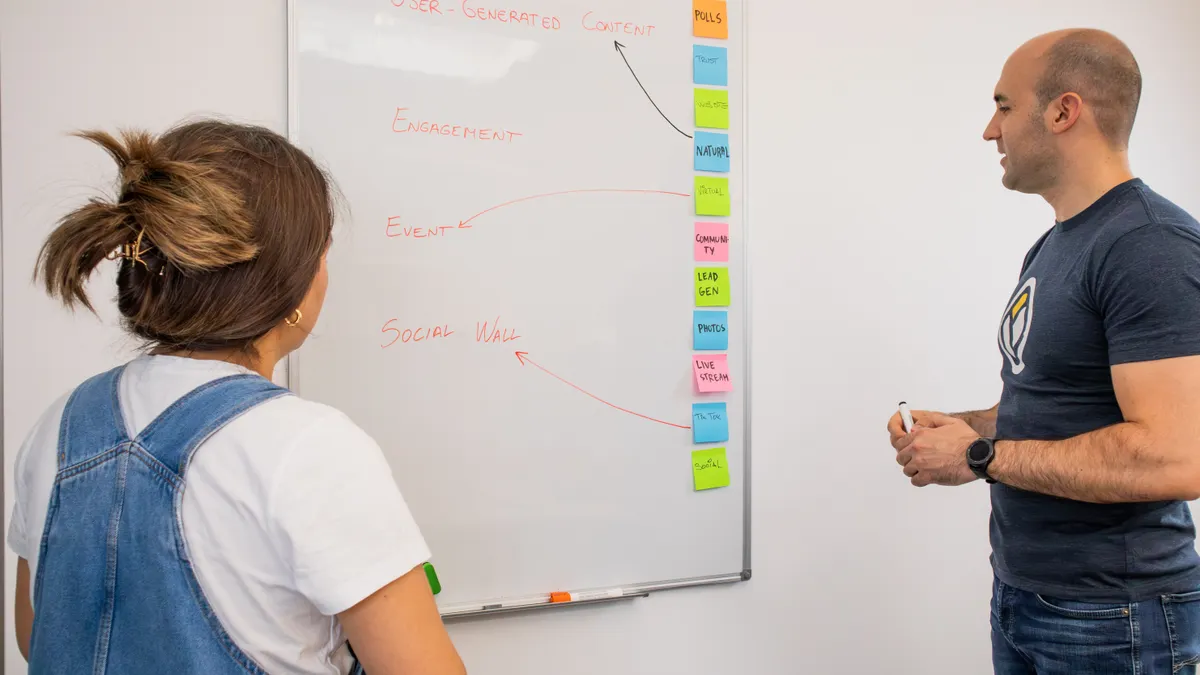
A practical system uses templates, standards, and a refresh cadence. Without those three, AEO becomes a collection of one-off edits that no one can maintain.
I would build the system around four content templates:
1) Definition pages
These answer “what is X?” in one short paragraph, then expand into scope, use cases, and exclusions. The opening sentence should be simple enough to quote. A good definition page also says what the term does not cover. That boundary is useful because answer engines prefer precise scope.
2) How-to pages
These answer “how do I do X?” with a direct list of steps, then explain where the steps can fail. The steps should be numbered, not buried in prose. If there is a tool, standard, or form involved, name it.
3) Comparison pages
These answer “which is better for my situation?” with criteria, trade-offs, and a clear recommendation. If the page does not say who each option is for, it is incomplete. This is where answer engines often extract the summary line, so the recommendation has to be explicit.
4) Troubleshooting pages
These can answer “why is X happening?” with the likely causes, the fastest checks, and the escalation path. These pages are especially valuable in support and product contexts because they map directly to user intent.
The standards that matter most are not glamorous. They are consistency standards:
- H1 and H2 language should mirror real user questions.
- Definitions should not conflict across pages.
- Dates, version numbers, and model names should match the source document.
- Tables should compare only the criteria that change the decision.
A refresh cadence is just as important as the template. I would assign different review windows by risk:
- High-risk content: review on policy or product changes, plus a scheduled check at least every quarter.
- Medium-risk content: review on major updates and a scheduled check twice a year.
- Low-risk content: review at least annually.
The hard part is not creating the template. The hard part is enforcing the template when a stakeholder wants “just one more paragraph” or “a little more branding.” That is where governance protects the page from becoming less answerable.
Which metrics actually matter for AEO?
The best metrics are source-eligibility metrics, not vanity metrics. If you only track clicks, you will miss the pages that answer well but convert later in the journey. That said, no single metric is enough, so a small dashboard with 5 measures is more useful than a big vanity report.
I would track five things:
- Citation frequency: how often a page or section is quoted in answer surfaces.
- Query coverage: how many meaningful question variants a page can satisfy.
- Snippet quality: whether the extracted text still makes sense out of context.
- Refresh compliance: whether pages are reviewed on schedule.
- Resolution rate: whether users stop searching after consuming the answer.
Those metrics tell you whether the page is acting like a source, not just a destination. They also help separate content quality from ranking luck. A page can rank well in classic search and still be a poor answer candidate if the opening is messy or the evidence is thin.
The wrong metric to obsess over is “AI visibility” as a single score. That is too vague to govern against. Visibility in which engine? For which query type? With what citation behavior? Without those distinctions, the number turns into a dashboard decoration.
I would also keep a close eye on internal consistency. If your help center says one thing, your product page says another, and your policy page says a third, answer engines may select the wrong version or avoid all of them. Governance should include a content inventory that maps canonical answers to their source pages.
One useful operational metric is how often editors have to fix factual drift after publication. If the team spends a lot of time correcting small mismatches in term usage, that is a governance signal. It usually means the content model is too loose or the approval chain is unclear.
This is the one place where many teams get the process backward. They measure output volume, then wonder why the output is hard to trust. AEO needs an editorial scorecard, not just a publishing count.
What are the biggest mistakes teams make with AEO?
The biggest mistake is writing for extraction without writing for accuracy. A short answer that is wrong is worse than a long answer that is merely dense.
I see four recurring errors:
1) They flatten nuance until the answer becomes unreliable
This happens when teams strip out qualifiers to make a page “snippet-friendly.” The result is a clean sentence that leaves out the condition that matters. If a recommendation applies only to small teams, enterprise users need to see that limitation.
2) They publish competing canonical answers
Two pages can say “the best approach” and disagree. Answer systems hate that. Governance should prevent duplicate authority on the same question.
3) They treat schema as a substitute for substance
Structured data helps engines identify content, but it cannot rescue a weak answer. Schema is a label, not a guarantee.
4) They ignore the cost of maintenance
A page that mentions a 2024 product version, a 2025 policy threshold, or a named compliance standard can go stale fast. AEO content ages visibly when it depends on current facts.
There is also a strategic mistake: trying to optimize every page for both answer extraction and conversion with equal force. Those goals often coexist, but they do not require the same balance. A support page should solve the problem first. A buying page can move toward conversion after the decision is clear. If you force the CTA too early, you may weaken the answer signal.
The consequence of these errors is not only lower performance. It is reputational drift. Once your content is known internally as “the page that mostly gets it right,” governance has already failed.
When does the strategy flip, and what are the exception scenarios?
The strategy flips when the query is highly transactional, the answer depends on real-time inventory or pricing, or the risk of being wrong is higher than the value of being cited.
The first exception is fast-changing commercial queries. If the answer depends on current stock, dynamic pricing, or promotions, AEO content should support the decision but not claim permanence. In that case, the page needs a live data layer or a clear handoff to the retailer page. Static summaries age too quickly.
The second exception is regulated advice. For health, finance, legal, and safety topics, the content should be conservative, heavily sourced, and reviewed by qualified experts. For those subjects, I would prioritize accuracy and compliance over concise answer formatting. If the source is uncertain, say so plainly and direct the user to professional help. Google’s Search Central documentation and the FTC’s guidance on advertising claims are useful reference points here, and the FTC’s 2023–2024 enforcement actions show that unsupported claims can create real risk.
The third exception is brand-defining opinion. Some companies need pages that sound distinctly like them, not like a generic answer engine. A heavy editorial voice can be right for thought leadership, but it weakens extractability if the language gets too stylized. In that case, keep one clean answer near the top and let the rest of the page carry the voice.
The fourth exception is multi-step workflows with tool dependency. If the user must configure software, authenticate accounts, or follow a live interface that changes monthly, the page should be built as a living guide with version notes and screenshots, not as a static summary. AEO can still help, but governance needs a tighter update loop.
These exceptions do not cancel the strategy. They define its limits. A mature program knows when to optimize for citation and when to optimize for caution, brand voice, or operational freshness.
The Verdict: which approach wins for most teams?
Choose answer-engine optimization strategy with strong governance if you publish recurring informational, technical, or decision-support content and can assign owners, review dates, and source rules. Choose a lighter, page-by-page optimization model if your site is small, your topic changes constantly, or you cannot maintain review discipline. Neither if you want AI visibility without editorial control, because that is how inaccurate pages spread.
My recommendation is simple: build the governance first, then scale the optimization. AEO without governance is just formatting. Governance without AEO is just bureaucracy. The useful version sits between them.
How do I start without creating a giant content program?
Start with one content inventory, one review policy, and one template for the page type that matters most to the business. If your site has 50 or fewer critical pages, you do not need a grand framework on day one. You need a list of canonical answers, a named owner for each one, and a schedule for checks.
The fastest path is usually this:
- Identify the 20 pages that answer the highest-value questions.
- Mark which ones are high-risk, medium-risk, or low-risk.
- Rewrite the opening answer so it can stand alone in 40–80 words.
- Add explicit sources, dates, or standards where the claim depends on facts.
- Remove duplicate or conflicting explanations elsewhere on the site.
If I were prioritizing, I would begin with pages that already attract search demand and already influence decisions: comparison pages, support pages, pricing explanations, and policy pages. Those pages have the most to gain from being clearer and the most to lose from drifting. A small team can usually update 5 to 10 critical pages in a first sprint.
I would not start with a mass rewrite of every blog post. That is busywork. It looks ambitious and usually drains momentum. Start with the pages that matter most and make them unmistakable.
Key Takeaways
- AEO is not just copywriting; it is a system for making content safe to quote.
- Governance matters first because engines prefer answers they can trust and reuse.
- The best content types for AEO are definitions, how-to pages, comparisons, and troubleshooting pages.
- Canonical answers, named owners, and review dates prevent conflicting pages from undermining one another.
- Metrics should focus on citation use, query coverage, and refresh discipline, not only clicks.
- The strategy changes for regulated topics, dynamic pricing, and live workflows.
What questions come up most often?
Is AEO replacing SEO?
No. AEO changes how some SEO content is planned and written, but classic search signals still matter. A page that is easy to quote and easy to trust usually helps both.
Do I need schema markup for AEO?
Schema helps machines classify content, but it does not fix weak writing. I would use it as support, not as the core strategy.
What kind of page is best for answer engines?
Pages with a clear question, a direct opening answer, and structured subheadings are usually strongest. Comparison pages and troubleshooting pages often perform especially well when they stay specific.
How often should content be reviewed?
High-risk content should be checked whenever the underlying facts change, with a scheduled review at least quarterly. Lower-risk pages can be reviewed less often, but they still need a refresh plan.
Can small teams do this well?
Yes, if they focus on a small set of canonical pages and avoid duplicate answers. A tiny, disciplined content system beats a larger one with no ownership.
Drafted with AI; not yet reviewed by a person.