Last updated: October 11, 2026
Key Takeaways
- Without brand reporting, track queries, answers, and citations instead of individual visitors.
- Run repeatable prompts, log citations, and score share of answers over time.
- Funds are limited? Start with a spreadsheet, browser checks, and Search Console.
- Strong AI search visibility means the right pages surface for the right queries with enough citation strength.
Quick Answer: To measure AI search visibility without brand analytics, use a fixed set of 25 to 50 non-branded prompts, check them monthly across Google AI Overviews, Bing Copilot, and Perplexity, and score each prompt 0 to 3 for absent, mentioned, cited, or primary citation. That gives you a usable visibility number even when brand-specific analytics are unavailable.
Brand-specific analytics can be missing and the work still gets done. Track how often your pages appear, get cited, or help shape answers inside AI results using query sets, source logs, and third-party rank tools. Instead of asking, “How many branded clicks did AI steal?”, ask a better one: “Do my pages show up when a buyer asks the kind of question I care about?” In this article, “How to measure AI search visibility without brand-specific analytics” means measuring query-level citations, answer placement, and coverage rather than visitor-level reporting.
What to measure when brand analytics are missing
When brand-level reporting is unavailable, the unit is the query, the answer, and the citation—not the visitor. AI search visibility shows up in the response stack, even when the platform hides user names, referral paths, or branded demand. Four things come first: presence, citation, position, and coverage.
Presence means your page or domain appears anywhere in the AI result. Citation means the system names or links to your source. Position means whether you are one of the first sources surfaced, especially in answer summaries. Coverage means how many of your target questions you appear for out of the set you actually care about.
Generic advice often stops at “track traffic from ChatGPT” or “look at referrers in analytics.” That breaks quickly, because many AI experiences do not send clean referral data, and some send none at all. So when visits cannot be tied to a brand, measure the demand side instead. Use a set of 25, 50, or 100 non-branded prompts that represent the questions your buyers ask. Then check whether your pages show up in Google AI Overviews, Bing Copilot responses, Perplexity answers, or ChatGPT browsing results when those prompts are used.
A simple benchmark helps: if you can get cited in 7 of 20 core prompts, that is a real visibility signal even before you know what the click value is. It is not a full ROI model, but it tells you whether your content is entering the answer set at all.
Quick check: No brand segments? No problem. If you have a target list of questions, this is the right measurement approach.
How do you measure AI search visibility without brand-specific analytics?
Run controlled queries, record citations, and score your share of answers over time. The cleanest setup is a spreadsheet, a repeatable query set, and one or two tools that can surface AI answer snapshots.
Start with the query set. I would build three buckets: high-intent questions, comparison questions, and problem-solving questions. For example, a software company might track “best SOC 2 automation tools for startups,” “X vs Y for compliance,” and “how long does SOC 2 take.” A local service brand might track “how much does [service] cost,” “best [service] near me,” and “what affects [service] timeline.” Keep the list stable for at least 30 days.
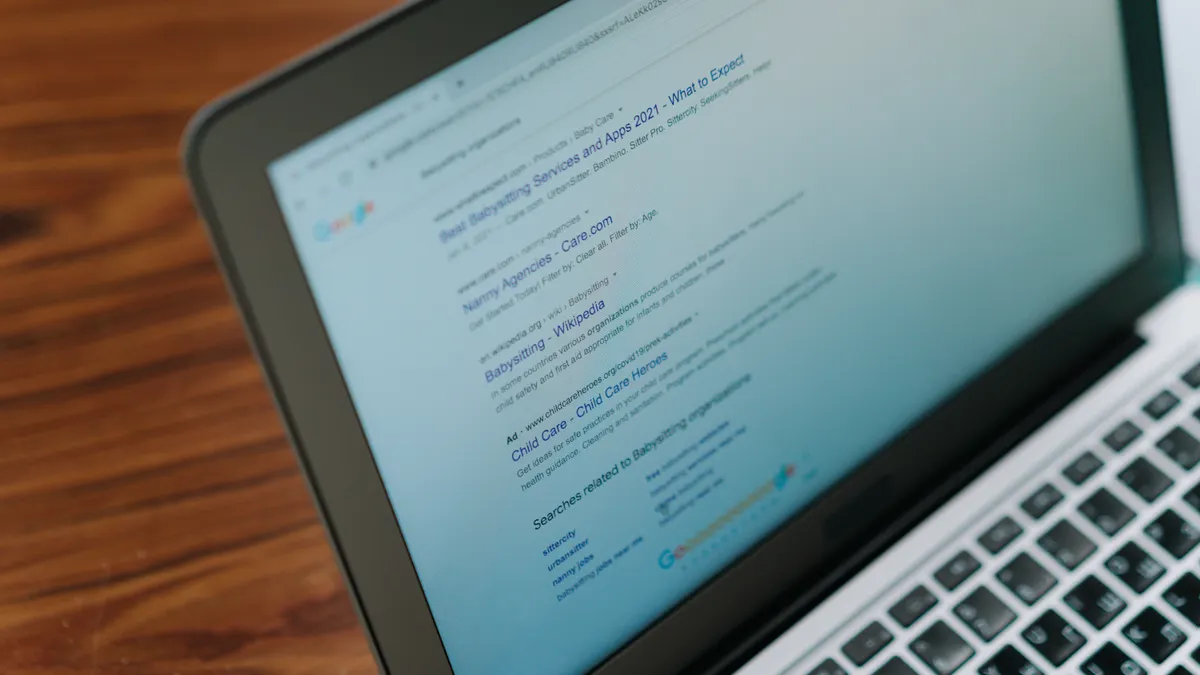
Then run the same prompts in the same places. Google Search is essential because AI Overviews can appear there. Bing matters because Copilot uses Bing-style retrieval. Perplexity is worth checking because citations are explicit. ChatGPT search or browsing results can also matter, depending on your audience. Record these fields: date, prompt, engine, visible answer type, cited sources, your domain present or absent, and whether your page is the primary citation or just one source among several.
Here is the simplest scorecard structure:
| Situation | Best Path | Why Other Options Fail |
|---|---|---|
| No brand analytics, but a fixed set of target questions | Manual prompt tracking in a spreadsheet | Traffic tools miss citations and answer placement |
| Need recurring reporting | Use a rank tracker with AI result capture | One-off screenshots are too hard to compare month to month |
| Need proof of source visibility | Log citations and page URLs for each prompt | Impressions alone do not show whether the AI used your content |
Then assign a score. I would use 0 for absent, 1 for mentioned but uncited, 2 for cited, and 3 for primary citation. If a prompt gets a 3, that is stronger than a generic mention and usually more actionable than raw traffic.
Useful tools here include Semrush, Ahrefs, STAT, and dedicated AI visibility trackers such as Profound or similar SERP-monitoring products that capture AI answer snapshots. Google Search Console still matters for classic search queries, but it will not tell you whether an AI summary used your page.
Quick check: Need a repeatable report, not a one-time audit? Use a prompt set plus scoring model.
If you need a cheap setup, here is the 30-minute method
Tight budget? Use a spreadsheet, browser tabs, and Search Console before you buy a tracker. The first question is not perfection; it is whether you are visible anywhere at all. A 30-minute manual process can get you a useful signal without a subscription.
First, pick 20 queries that match commercial intent. Do not use your brand name. Use the questions buyers ask before they know your brand. Second, run each query in Google and note whether an AI Overview appears. Third, if it does, record whether your domain is cited. Fourth, repeat the same queries in Bing and Perplexity. Fifth, tally your score by engine and by prompt type. Sixth, compare that list with the pages you actually want AI systems to use.
- Create a sheet with columns for query, engine, answer type, cited domains, your domain, and notes.
- Collect 20 to 30 prompts from sales calls, support tickets, People Also Ask, and forum threads.
- Search each query in Google, Bing, and Perplexity in a clean browser session.
- Log whether your page is cited, mentioned, or absent.
- Group the prompts by intent: pricing, comparison, setup, troubleshooting, or buyer education.
- Calculate a simple visibility rate: prompts with any mention divided by total prompts.
This method has limits. It is manual, so it is slow. It also reflects a point in time, not a live feed. Still, if you only need a first read, it beats guessing from impressions or waiting for perfect tooling. It is wrong for large teams reporting to executives every week, because screenshots and notes do not scale.
A practical benchmark is to treat a refresh as a problem when most of your key prompts still do not surface your pages, even before traffic changes show up. If you are present in most prompts but rarely cited first, the content may be visible but not trusted enough.
Quick check: Need something you can do today without buying software? This path fits.
What actually counts as good AI search visibility?
Good AI search visibility means the right pages show up for the right queries, in the right engines, with enough citation strength to influence the answer. That is different from “getting mentioned somewhere.” A mention with no link or source credit is weaker than a cited result that leads the AI to your page.
In a competitive category, I would care about three thresholds. First, are you in the answer set at all? Second, are you cited by name or URL? Third, are you one of the first sources the model or search layer uses? A page can be visible and still lose the sale if it sits low in a short source list.
Do not judge performance by organic traffic alone. AI search often compresses the funnel. A user may learn enough from the answer and never click, which makes classic click metrics look worse than the content actually is. The better question is whether your content is being used to shape the answer.
A useful benchmark is topical coverage. If you have 40 important prompts and you appear in 10, your coverage is 25%. That is not a vanity metric; it tells you where to improve content, internal linking, and source authority. If you appear in 10 but are cited first in only 2, you have an authority gap, not just a visibility gap.
This is where generic advice often misleads people. “Publish more content” is not a measurement method. It is a hope. Measurement should tell you whether existing pages are being selected by retrieval systems. If they are not, changing page structure, adding clear definitions, tightening answer blocks, and earning stronger external references may matter more than adding volume.
Quick check: Already rank decently in blue links but still miss AI citations? Your problem is trust and retrieval, not raw content count.
Which tools should you use, and which ones should you ignore?
Use tools that show query-level snapshots; ignore tools that only show aggregate traffic. If the product cannot tell you which prompt triggered which answer, it will not solve this problem. You need line-of-sight from query to citation.
My short list starts with Google Search Console for baseline search demand, then a rank-tracking platform such as STAT or Semrush for query movement, and then an AI-specific tracker if you need repeatable snapshots across answer engines. Ahrefs is still useful for content gap and backlink analysis, which matters because many AI systems prefer pages with clear authority signals. Perplexity itself can be part of the workflow because it exposes citations more clearly than many other interfaces.
I would not rely on server logs, GA4 referral data, or branded conversions alone. Those are useful supporting signals, but they are not enough to answer “Are we visible in AI search?” Server logs can show bot activity or odd referrals, but they rarely map cleanly to answer selection. GA4 can tell you about traffic after the fact, not whether your content was included in the response. Branded conversions are too downstream and too noisy.
If you have budget for one paid tool, choose the one that lets you store prompts, rerun them on a schedule, and export snapshots. A 12-month subscription may be worth it if you report monthly. If you do not, do not buy a dashboard because it looks sophisticated.
A useful split is this:
- Search Console fits search demand and query discovery.
- A tracker like Semrush, STAT, or Profound-style AI monitoring fits repeatable visibility checks.
- Manual checks in Perplexity or Google AI Overviews verify what the tool reports.
Quick check: If your tool does not show prompt-level evidence, it is reporting SEO, not AI visibility.
Edge cases where normal advice breaks down
Some situations need a different lens.
-
Your brand name is generic or shared with others.
What changes: branded analytics become noisy because the name overlaps with unrelated searches.
The fix: focus on non-branded prompt sets and URL-level citations. Measure whether the correct page appears for product and problem queries, not whether the name gets a click. -
Your audience uses answer engines more than classic search.
What changes: traffic may drop even while visibility rises, because the user gets the answer without clicking.
The fix: track citation frequency and primary-source status in ChatGPT browsing, Perplexity, and Google AI Overviews. A 0-click result can still be strong visibility. -
You publish mainly PDFs, docs, or gated pages.
What changes: some AI systems may not retrieve gated content well, and PDFs can be cited inconsistently.
The fix: create a public summary page for each major asset and measure that page, not the asset behind the gate. -
You serve a regulated category like healthcare, finance, or legal.
What changes: visibility matters, but accuracy and compliance matter more than raw frequency.
The fix: measure whether the AI cites the approved page, not just any page on your domain. -
Your site is small and has low authority.
What changes: you may not win broad prompts even with good content.
The fix: measure narrow, long-tail questions first. A 15-page site can still own “how to implement X in Y context” even if it cannot win “best X.”
Quick check: If your brand is noisy, gated, regulated, or low-authority, do not use a generic visibility score without adjusting the query set.
A practical measurement workflow you can repeat every month
If you want a durable system, run the same five-step process every 30 days. Consistency matters more than volume. A 50-query set repeated monthly is more useful than a 500-query audit you never repeat.
- Pick 25 to 50 core prompts across awareness, comparison, and bottom-funnel intent.
- Run them in Google, Bing, and Perplexity with a clean browser profile.
- Log whether your domain is absent, mentioned, or cited first.
- Compare the prompts where you lost visibility with the pages those prompts should map to.
- Revise the page, then rerun the same prompts 30 days later.
This is the part many teams skip: tie each prompt to one page you want selected. If a prompt about “pricing” has no pricing page, or a prompt about “setup time” points to a generic homepage, your measurement will be messy and your fixes will be too. The goal is not just to count visibility. It is to connect visibility to a page that can answer the question better than your competitors can.
I would also separate “visibility” from “value.” A page can be cited often and still bring poor-fit traffic. Another page can be cited less often but drive more qualified demand. Track both, then decide which gaps matter.
How to turn visibility data into better pages
When citation data shows weak coverage, do not start with more publishing. Start with the prompts where you are absent or buried. Those gaps usually point to one of three problems: the page is too broad, the answer is too thin, or the source signals are too weak.
Look at the pages AI engines already prefer. If they are quoting competitor pages with clear definitions, step-by-step answers, or short comparison tables, your page probably needs that same structure. If the engine cites a forum, a documentation page, or a well-linked explainer instead of your marketing page, that tells you something about format, authority, and retrieval.
Use the prompt log to map each miss to a fix. A pricing prompt may need a visible price block. A comparison prompt may need a neutral table. A troubleshooting prompt may need a direct diagnostic section. Then rerun the same query set after the update. That is how measurement becomes improvement rather than reporting.
Where links and authority fit
Since citations often depend on source trust, internal and external links matter more than many teams expect. A page that is isolated from the rest of the site is harder for both users and retrievers to understand. A page that has a clear path from related content, plus a few reputable external references, is easier to trust.
For related reading, see AI Overview tracking basics, query mapping for content teams, and content gap analysis for search teams. If your reporting setup is still changing, Search Console for content planning can help with query discovery.
For factual background, Google explains AI Overviews in its Search documentation, OpenAI documents browsing and search behavior in its help materials, and Perplexity publishes citation-oriented product information. See Google Search Help, OpenAI Help Center, and Perplexity.
Quick check: Know which prompts you lose, and you can usually tell which pages need structure, authority, or both.
Final rule of thumb
If brand analytics are missing, do not wait for perfect attribution. Measure query coverage, citation quality, and source position on a recurring schedule. That is enough to see whether your pages are entering AI answers, and it is usually enough to decide what to fix next.
Quick check: If you can repeat the same prompts next month and compare the results, you already have a usable system.
Drafted with AI; not yet reviewed by a person.