Last updated: November 12, 2026
AI search localization is the work of making an AI search product understand languages, regions, scripts, units, laws, and local intent well enough to answer people naturally in each market. If your answer works in one country but fails in another, the search product is not localized yet. The sections below settle what to change, what to keep, and what breaks first.
Key takeaways
- Internationalization is the setup work; localization is the market-specific work.
- The best search systems separate language handling, indexing, ranking, and answer generation.
- Machine translation alone misses slang, legal terms, units, date formats, and intent.
- Local search quality depends on locale-aware content, not just translated pages.
- Evaluation has to be done per language and per country, not as one global score.
- The biggest failures are mixed-language results, wrong entities, and answers that sound fluent but are locally wrong.
A senior search strategist who has shipped multilingual information products for years can judge this category without pretending there is one magic layer that fixes it.
What problem does AI search localization actually solve?
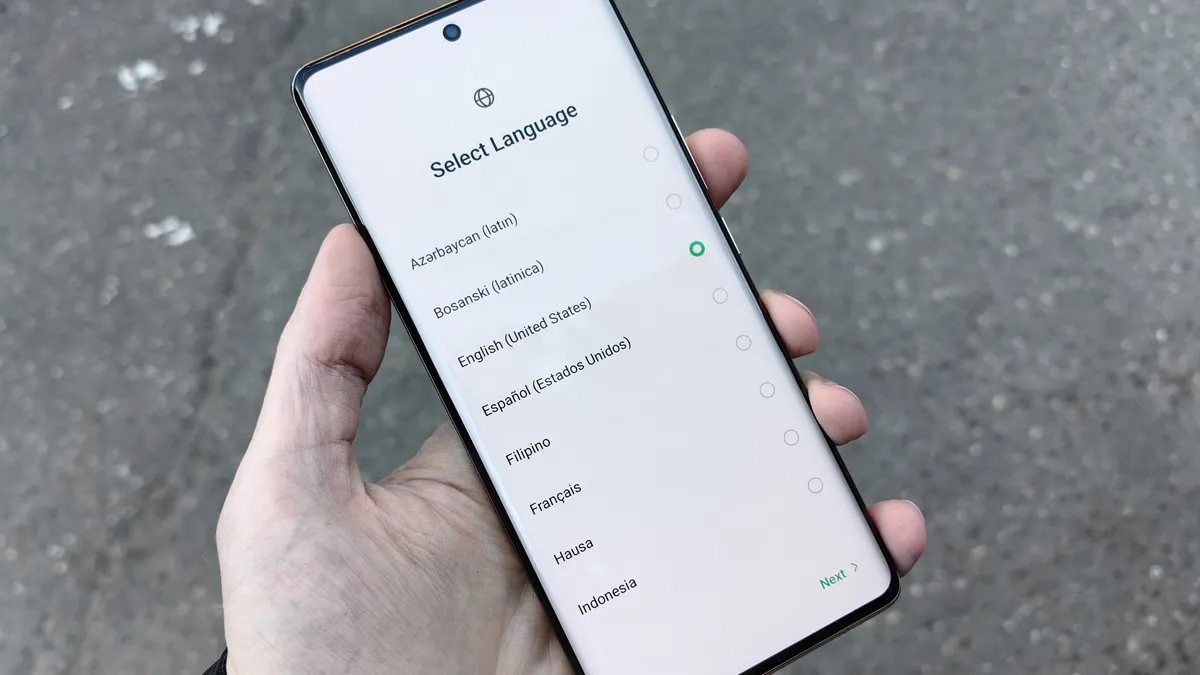
AI search localization solves the mismatch between what a user means in a local market and what your search system thinks they mean. Picture this: you have one query pipeline, but users in Spain, Canada, and Japan expect different spelling, currency, laws, date formats, and even different results for the same product name.
That gap is bigger than translation. It includes language detection, locale-specific indexing, regional ranking signals, and answer generation that respects local conventions. If those pieces are not aligned, the system can sound polished and still be wrong.
A local query like “bank holiday,” “football boots,” or “tax return deadline” can mean different things in different countries. One model may parse the words correctly and still return the wrong country’s intent.
What a generic article gets wrong is this: it treats localization as a copy task. It isn’t. It is a product design problem, an index problem, and a quality-control problem all at once. A good system needs to know not just the language, but the market.
The four layers that need local handling
- Input understanding — language ID, transliteration, spelling variants, named entities, and code-switching.
- Retrieval — which documents get indexed, boosted, filtered, or hidden by locale.
- Generation — which answer style, units, and terminology the model uses.
- Evaluation — how you judge relevance, correctness, and trust per locale.
If one layer is global and the others are local, the system breaks in predictable ways. The failure often shows up first in search suggestions and answer summaries.
What is the difference between internationalization and localization in AI search?
Internationalization is the engineering choice that makes later localization possible; localization is the market-specific adaptation itself. Picture this: you’re building one search stack for twelve countries, and you need it to handle plural rules, right-to-left text, decimal separators, and local content without a rewrite each time.
That split matters because teams often mix the terms and then do the wrong work in the wrong order. Internationalization comes first. It means the code, data model, prompts, and evaluation framework can support multiple locales cleanly.
Localization comes after that. It means the actual language, country, and cultural differences are applied to content, ranking, and answers. The same product page can appear differently in Mexico than in Germany even when the underlying item is identical.
Here’s the catch: if you skip internationalization, localization becomes a pile of exceptions. Every new market adds brittle rules, duplicate content, and a larger QA burden.
Internationalization handles the system
Internationalization sets the structure. It usually includes:
- locale tags such as
en-US,fr-CA, orja-JP - Unicode-safe text handling
- plural and gender rules
- date, time, currency, and measurement formatting
- script support for Latin, Cyrillic, Arabic, or Han characters
A platform that lacks these basics will fail before ranking even starts. That is why i18n should be built into the schema, the prompt layer, and the logging layer.
Localization handles the market
Localization changes the content and behavior for a target locale. That can mean:
- translated titles and snippets
- local synonyms and spellings
- country-specific ranking boosts
- local compliance language
- region-specific answer templates
If the query is “rent a car” in the UK, the system should not behave the same way it would for a user in the US or Australia. The words may match; the intent still differs.
Which parts of AI search need to be localized first?
The answer is retrieval first, then generation, then the user interface. Picture this: a user asks in Arabic, the model replies in Arabic, but the search index still favors English pages and US entities. The answer reads well and still misses the right source.
That ordering matters because search quality depends on what gets retrieved before the model starts writing. If the wrong documents enter the top results, the final answer can only polish a bad set.
The best starting points are the components that affect correctness most:
- Language detection: identify the query language before routing.
- Entity normalization: map local spellings and aliases to the right entity.
- Locale-aware ranking: boost content that matches region and language.
- Answer formatting: adapt units, dates, and examples to the locale.
- Fallback logic: decide when to translate, when to switch language, and when to say nothing.
A lot of teams begin with the UI because it is visible. That is usually the wrong move. The widget can be translated in a week; the index and ranking rules can take months.
Retrieval is the hardest layer
Retrieval decides what the model can possibly say. If the index is not locale-aware, the system may retrieve the right topic but the wrong regional version of it.
Common fixes include:
- separate indexes by market
- language-specific analyzers
- locale-based filters on freshness and authority
- synonym dictionaries for local phrases
- entity disambiguation tuned to region
This is where many multilingual systems fail on named entities. “Mercury” can be a planet, a brand, or a term in a local knowledge base. The model needs more than translation to choose correctly.
Generation is where errors become visible
Generation turns retrieved sources into an answer the user can read. The main localization risks are:
- wrong tone for the market
- literal translation of idioms
- currency or date formatting mistakes
- mixing official and informal terms
- answers that ignore local regulation
An answer can be grammatically perfect and still violate local expectations. That is especially risky in health, finance, travel, and legal-adjacent search.
How do you localize ranking and retrieval without wrecking global coverage?
You localize ranking and retrieval by separating global relevance from local relevance and then deciding how they trade off. Picture this: a query has one topic, but the user in one market needs local sources, while the same query elsewhere should still find global canonical pages.
That balance is the whole game. If you over-localize, users lose access to useful global information. If you under-localize, they see foreign results that look authoritative but miss the local answer.
A clean design usually uses these signals:
- Query locale — inferred from browser, user setting, region, or language.
- Document locale — declared in metadata, hreflang-like annotations, or corpus labels.
- Content locale — where the page was written for, not just the language used.
- Authority locale — local institutions, local domains, and local citation patterns.
- Freshness locale — dates that matter in one market but not another.
The system should not assume language equals locale. A French query from Quebec and a French query from France can want different answers, different spellings, and different sources.
A useful policy is “local first, global as backup”
For many intents, the ranking policy should prefer local sources when the user signal is strong and fall back to global sources only when local coverage is thin.
That works well for:
- shipping
- tax
- public services
- employment rules
- store availability
- local events
It works less well for evergreen factual topics where one canonical source is enough. In those cases, forcing a local result can harm precision.
The mistake to avoid
Do not map every locale to the same translated content set. A translated page is not a local page. If the product, law, or service changes by country, the content must change too.
That is where many global websites lose trust. The page is readable, but it is not relevant.
How do you localize prompts, answers, and citations?
You localize prompts, answers, and citations by giving the model explicit market rules, source rules, and output rules. Picture this: the user asks for a refund policy in Spanish, and the model must answer in Spanish, cite local policy pages, and avoid U.S.-only terms that do not apply.
This layer matters because the model can hallucinate local confidence. Fluent text does not guarantee local truth.
A strong localization prompt stack usually includes:
- the target locale
- preferred terminology for that market
- forbidden phrases or regions
- citation rules for local sources
- output format for units, dates, and currency
- escalation logic when local evidence is weak
If the search product uses retrieval-augmented generation, the citations must be locale-aware too. A citation from the wrong country can be worse than no citation at all.
The answer style must change by market
Some markets prefer direct, short answers. Others expect more context, caution, or formal wording. The system should not sound identical everywhere.
For example:
- date formats should follow local convention
- temperature should match local measurement habits
- currency should match the user’s market
- honorifics or formality levels should match the locale
- terminology should reflect local usage, not dictionary English
The answer should also know when not to answer. If the local evidence is thin, the model should say that clearly rather than fill the gap with a foreign source.
Citations need local credibility
Users trust sources that are local and recognizable. A government site, standards body, local regulator, or local publisher often carries more weight than a global page that happens to be translated.
That does not mean global sources are bad. It means the citation strategy should match the question. For local compliance or service questions, local sources usually win.
How do you evaluate AI search across languages and countries?
You evaluate AI search by locale, not by one global benchmark. Picture this: your English score looks strong, but your Japanese queries fail on entity parsing, your Spanish queries over-retrieve translated boilerplate, and your Arabic queries break on script handling.
That is not one problem. It is several.
A serious evaluation plan should include:
- per-locale query sets
- human judgments in each target language
- entity-level accuracy checks
- retrieval recall by locale
- answer faithfulness checks
- local formatting checks
- fallback and refusal tests
If you only compare aggregate scores, the strongest market hides the weakest one. That is the trap.
Use locale-specific test sets
A test set should include real user language, not just translated English queries. Translated queries often flatten the differences that matter most.
Good test sets include:
- colloquial phrasing
- code-switching
- local abbreviations
- region-specific brands
- local laws and services
- ambiguous terms with market-dependent meaning
That is how you find failures that translation glosses over.
Judge what the user actually sees
For AI search, you need to judge the whole output chain:
- Did the system understand the query?
- Did it retrieve the right local sources?
- Did the answer stay faithful to those sources?
- Did it format the response correctly?
- Did it avoid local misinformation?
A pretty answer with the wrong market is still a bad answer. Search quality is not just fluency.
What usually goes wrong first?
The first thing to break is usually entity handling, followed by mixed-language retrieval and then bad fallback behavior. Picture this: the user types a local brand name, the model expands it into a translated concept, and the search engine returns pages that look related but are not the right thing.
That failure pattern is common because entities are harder than general language. Brands, places, legal terms, public programs, and product names often do not translate cleanly.
The most common failure modes are:
- returning the wrong country’s page
- translating a product or entity name that should stay fixed
- mixing scripts in one answer
- using a source that is not legal or relevant in the user’s market
- formatting currency, units, or dates the wrong way
A lot of teams also discover that their search logs are too dirty to use. If the logs do not carry locale, language, and region separately, you cannot debug the problem with confidence.
Mixed-language results are a warning sign
Mixed-language results can be useful in some situations, but they usually mean the locale logic is weak. The user may get an English snippet, a French answer, and a Spanish source list in one screen.
That is confusing, and it lowers trust. The system should have a clear policy for when cross-language retrieval is allowed.
Fallbacks need rules
When local content is thin, the system needs a clear fallback policy. It may translate a global source, summarize a local snippet, or refuse to answer.
What it should not do is quietly swap in a foreign result and hope nobody notices. That is how a search product loses trust in one market at a time.
When should you localize later instead of right away?
You should localize later when the product is still changing fast, the target market is small, or the search use case is mostly internal. Picture this: the content model is still changing weekly, and every locale-specific rule would need to be rewritten in a month.
In that case, over-localizing too early creates expensive cleanup. The structure still needs internationalization, but the market-specific layer can wait until the core query patterns stabilize.
This is especially true if:
- the content catalog is still evolving
- the product will not launch in all markets at once
- the query volume is low in some locales
- the legal or compliance rules are still under review
- the taxonomy is not stable enough for locale-specific tuning
The truth is, many teams should build for localization before they fully localize. That sounds contradictory, but it is not. The system should be ready for locale-specific behavior even if the first launch stays narrow.
Don’t confuse readiness with rollout
Readiness means the architecture can support localization. Rollout means you actually apply it. Those are different decisions.
A good rollout plan usually starts with:
- locale tagging in the index
- language-specific retrieval rules
- localization-aware analytics
- per-market QA checks
- a fallback policy for low-coverage markets
That lets you scale without rewiring the whole stack later.
What does a practical localization workflow look like?
A practical workflow moves from data to ranking to language to QA in that order. Picture this: you are preparing one query experience for five markets, and you need a process that does not collapse into manual patchwork.
A solid workflow usually looks like this:
-
Map locales and markets
Decide which countries, languages, and script variants matter. -
Label content by locale
Tag pages, entities, and answers with the right market metadata. -
Tune retrieval rules
Add language analyzers, synonym dictionaries, and locale boosts. -
Set output rules
Define tone, units, date formats, currency, and citation policy. -
Build locale test sets
Create real queries from each market and judge them separately. -
Monitor logs by locale
Track errors, fallbacks, and satisfaction by country and language. -
Review edge cases
Look at code-switching, mixed-script queries, and named entities.
This workflow keeps localization from becoming a one-time translation project. It turns it into an operating process.
The metrics should be local too
A global average hides market pain. Track answer quality, retrieval success, and fallback rates by locale. Track them by language and region, not just by page or query volume.
That is the only way to see which markets are healthy and which ones are quietly failing.
How do you decide what to localize first?
You localize the highest-risk user paths first: the ones where a wrong answer causes the most confusion or the most business damage. Picture this: a user is asking about a local service, a regulated product, or a country-specific policy. That query deserves priority over a generic informational query.
A good priority order is:
- regulated topics
- transactional queries
- local service queries
- entity-heavy searches
- high-volume queries in the target market
- generic evergreen topics
This order is practical because the cost of a bad answer is not equal across all query types. A generic fact may be acceptable in translation. A local compliance answer usually is not.
Start with markets that have real content depth
A locale with strong content, good metadata, and known demand is the easiest place to start. Sparse markets can still be supported, but they need stronger fallback rules and more manual review.
That is why localization work is often uneven at the beginning. Some markets are ready for deep tuning; others need basic internationalization first.
FAQ
Is translation the same as localization in AI search?
No. Translation changes language, while localization changes language plus market behavior. A translated answer can still use the wrong currency, source, legal assumption, or product name for the user’s locale.
Do I need separate indexes for every country?
Not always. Separate indexes help when content, compliance, or entity sets differ a lot by market. If the corpus is shared and the differences are light, one index with strong locale filters may be enough.
What is the biggest mistake teams make?
They localize the interface before they localize retrieval. That makes the product look ready while the underlying search still returns the wrong country’s content, sources, or entities.
How do I know if my AI search is too English-first?
Look at your logs for mixed-language results, weak recall in non-English queries, and answers that cite local queries with foreign sources. If those failures cluster by market, the system is still English-first under the hood.
What should I measure first?
Measure retrieval success, answer faithfulness, and locale-specific fallback rates. Those three metrics show whether the system found the right material, answered from it correctly, and handled weak coverage without pretending it had certainty.
Drafted with AI; not yet reviewed by a person.